Queer Places:
Harrow School, 5 High St, Harrow HA1 3HP, United Kingdom
University of Cambridge, 4 Mill Ln, Cambridge CB2 1RZ
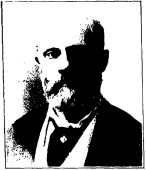 Edward John Chalmers Morton (known professionally and publicly as E. J. C. Morton, 1856 – October 3, 1902) was a British barrister, intellectual, and Liberal Party
politician who served as a Member of Parliament (MP) during the late Victorian era.
Edward John Chalmers Morton (known professionally and publicly as E. J. C. Morton, 1856 – October 3, 1902) was a British barrister, intellectual, and Liberal Party
politician who served as a Member of Parliament (MP) during the late Victorian era.
Born in 1856, Morton was the son of agricultural writer John Chalmers Morton and the grandson of the mineralogist John Morton.
He was educated at Harrow School, where he was noted for academic achievement, appearing on the school's speech day programs in the late 1870s.
He went on to attend St John’s College, Cambridge—traditionally a major hub for high-achieving scholars and radical thinkers. He won a scholarship in 1879 and graduated
with a Bachelor of Arts (B.A.) degree in 1880.
Following his time at Cambridge, Morton trained for the legal profession and was called to the bar at the Inner Temple in 1885. He subsequently practised on the North
Eastern Circuit.
Standing as a Liberal, Morton was elected to the House of Commons at the 1892 general election, representing the constituency of Devonport in Devon. He held the seat
through subsequent elections, winning re-election in 1895 and 1900.
Contemporary obituaries in The Times remembered him as an exceptionally energetic platform speaker and an active pillar of the Liberal party. Outside of his parliamentary
duties representing Devonport, he served for many years as the secretary of the Home Rule Union, advocating strongly for Irish self-governance.
Morton suffered from declining health in the autumn of 1902 and underwent a surgical operation. He traveled to his sister's home in Amberley, Gloucestershire, to
recuperate, but complications set in. He passed away there on October 3, 1902, at the age of 46.
During his undergraduate years at St John’s College, Morton was elected to the ultra-exclusive and secretive intellectual society, the
Cambridge Apostles.
Founded in 1820, the Apostles met weekly (traditionally on Saturday evenings) to debate philosophy, ethics, politics, and religion away from the strict orthodoxy of
Victorian academia.
Morton belonged to a notable nineteenth-century cohort of Apostles that bridged the mid-Victorian era and the intellectual groundwork leading into the Edwardian period.
His contemporaries and fellow society members included figures like Donald MacAlister and other prominent university scholars, jurists, and public servants.
While E. J. C. Morton lived during a period of intense criminalization and social policing of same-sex desire in Victorian Britain (typified by the Labouchere Amendment
and later the Oscar Wilde trials), his primary historical link to LGBTQ history stems directly from his membership in the Cambridge
Apostles.
By the late 19th and early 20th centuries, the Cambridge Apostles had evolved into a vital subcultural space for the discussion of love, aesthetics, and non-normative
relationships. For queer cultural legacy, the society is recognized for facilitating frank discussions on homoeroticism and utilizing a reimagined form of Platonic love as a
philosophical counter-discourse against rigid Victorian gender and sexual mores.
The social and intellectual networks forged inside the Apostles during Morton’s era laid the structural groundwork for subsequent generations of queer writers,
economists, and thinkers—most notably the core members of the Bloomsbury Group (such as Lytton Strachey,
John Maynard Keynes, and E. M. Forster, the latter of whom was also an Apostle from
St John's College).
References:
- A Cambridge Alumni Database (Venn, J. & J. A., Alumni Cantabrigienses): University of Cambridge records detailing E. J. C. Morton's entry to St John's College, scholarship win (1879), and graduation (B.A., 1880).
- Debrett’s House of Commons and the Judicial Bench (1901): Contemporary directory detailing his professional standing, political alignment as a Liberal, and parliamentary record representing Devonport.
- The Times (London): "Speech Day at Harrow" (July 4, 1879) – documenting his early education.
- The Times (London): "The General Election: Biographies of Candidates, England And Wales" (June 27, 1892).
- The Times (London): Obituary for E. J. C. Morton (October 6, 1902, Issue 36891, p. 4) – recording his career as a platform speaker, his role as secretary of the Home Rule Union, and the details of his passing in Amberley, Gloucestershire.
- British Parliamentary Election Results 1885–1918 (compiled by F.W.S. Craig) – tracking his electoral wins in 1892, 1895, and 1900.
- The National Archives (UK): Name authority records and manuscript collections regarding Edward John Chalmers Morton (GB/NNAF/P163641).
- Historical and Academic Studies on the Cambridge Apostles: Scholarly analyses of the Cambridge Conversazione Society (such as historical overviews of its subcultural networks, the adoption of Platonic ideals, and its continuity into the early 20th-century Bloomsbury intellectual circles).
Support this project
This website is a passion project researched, developed, and funded entirely by me. If you find the content valuable and would like to help support the ongoing research and hosting costs, any contribution is deeply appreciated.
Thank you for keeping this independent resource alive!
My books on Amazon: Elisa Rolle's books
BACK TO HOME PAGE